
Markets
PJM Markets Support Efficiency and Resource Adequacy
Competitive PJM markets procure electricity supplies needed in real time and in the future. PJM collaborated with its stakeholders to consider and act upon modifications to keep pace with the changing grid and ensure that reliable electricity continues to be delivered cost-effectively.
Capacity Auctions Reflect Need for More Resources
The purpose of the capacity market is to commit and reflect the marginal value of power resources required to meet established reliability standards up to three years in advance.
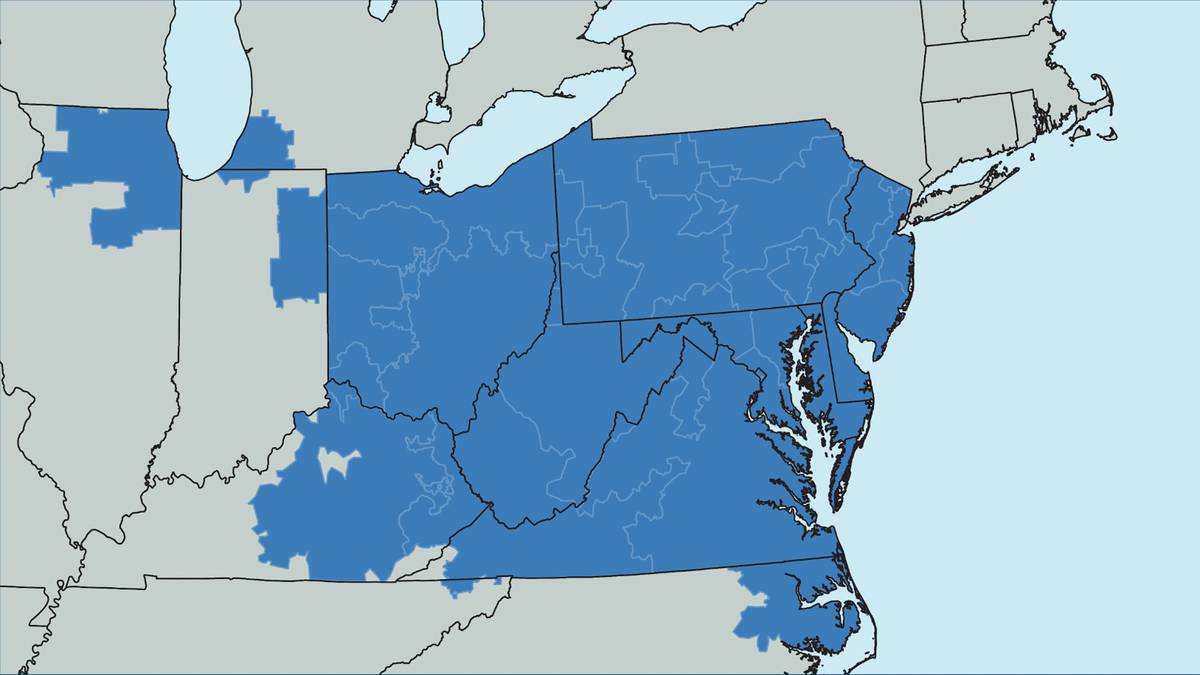
Capacity auctions conducted in 2025 secured generation and DR resources to meet the projected power needs of more than 67 million people across 13 states and the District of Columbia. Both auctions for the 2026/2027 and 2027/2028 delivery years reflected the longtime trend of tightening supply and increasing demand outpacing new supply. These auctions continued to take place on a compressed schedule with the goal of returning to the typical three-year-ahead auction in May 2027 for the 2030/2031 Delivery Year.
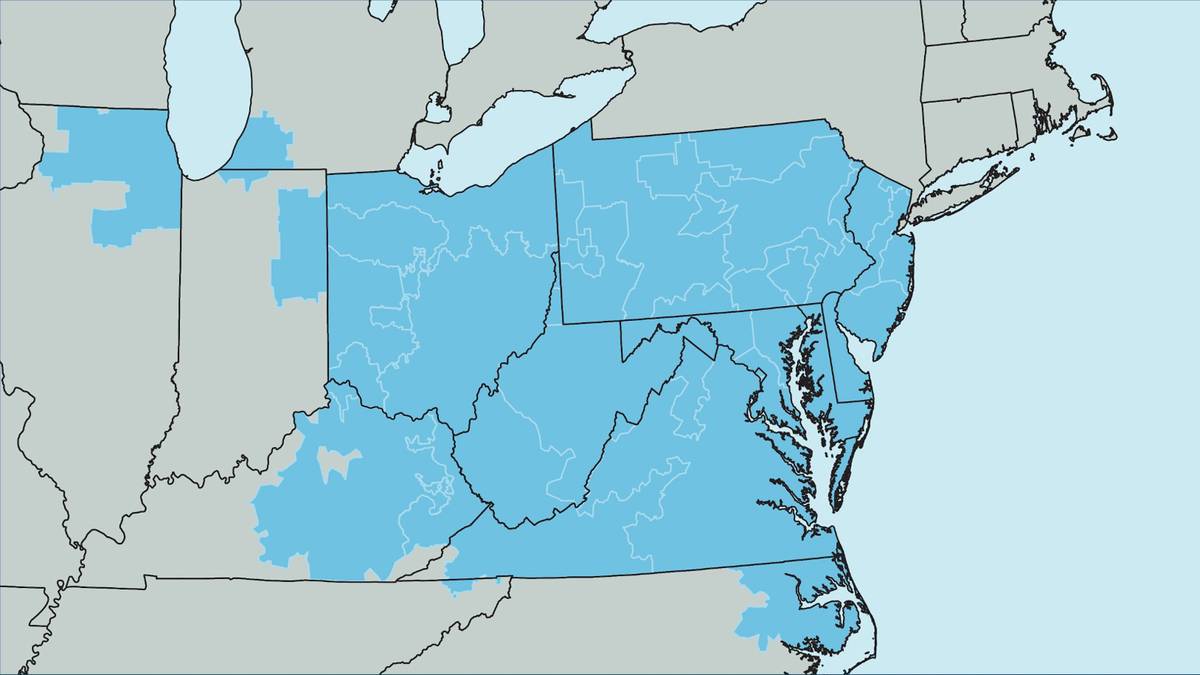
- In July, the 2026/2027 Base Residual Auction secured 134,376 MW of unforced generation capacity (UCAP) and DR. Regions under the Fixed Resource Requirement acquired an additional 11,933 MW in UCAP for a total of 146,244 MW, meeting the reliability requirement target of 19.1% in reserves but with no excess. RTO-wide prices came in at the FERC-approved cap of $329.17/MW-day. The auction attracted nearly 2,700 MW in new generation and uprates, but forecasted peak load increased by more than 5,400 MW, continuing the trend of new forecasted demand outstripping supply.
- In December, the 2027/2028 Base Residual Auction secured 134,479 MW UCAP of generation and DR at the FERC-approved price cap of $333.44/MW-day. The capacity procured in the auction, plus 11,299 MW acquired by regions under the Fixed Resource Requirement, fell short of PJM’s Reliability Requirement by 6,517 MW, the first time the auction had not met the reliability requirement since it was created in 2007 as forecasted demand growth continued to outpace new generation resources. PJM continues to hold a reserve margin of 14.4%, and multiple mitigating factors, such as improvements in the interconnection process, market enhancements and a more robust load forecast, could improve the reliability picture for the system in the 2027/2028 Delivery Year.
Expanding Capacity, Protecting Consumers
Amid rising capacity auction prices, constrained supply and rising demand, PJM undertook several initiatives to best align capacity market rules with current supply and demand conditions while also shielding consumers from unprecedented market volatility. These efforts successfully expanded existing supplies and eased upward pressure on prices as longer-term collaboration took place on solutions to supplement the generation fleet.
New market rules approved by FERC early in 2025 helped maximize contributions from existing resources as demand continued to outstrip supply – a cautionary note echoed by the PJM Board of Managers in support of these immediate actions. PJM proposed, and FERC accepted, measures to increase or add unit efficiency and capacity for the 2026/2027 and 2027/2028 delivery years.
These included:
.svg)
Reliability Must-Run (RMR) resources are generators whose owners have announced their intention to retire the units but have agreed to time-limited operations and compensation arrangements while PJM addresses reliability issues. In Maryland, Wagner Units 3 and 4 and Brandon Shores Units 1 and 2 were included in the auctions for their capacity (but not for compensation).

The Federal Energy Regulatory Commission in May approved a PJM proposal that improves dispatch and accreditation of DR resources in order to enhance grid reliability and resource adequacy. FERC’s order broadens the window for DR participation from a limited set of hours during the summer and winter to around the clock throughout the year, allowing for expanded and more accurate DR participation as capacity resources, beginning with the 2027/2028 Delivery Year.

Temporary price cap and floors filed by PJM were approved by FERC as part of an agreement with the Pennsylvania governor. The cap of about $325/MW-day and floor of about $175/MW-day for the 2026/2027 and 2027/2028 auctions balanced need for price signals to incentivize new supply while controlling the impact of cost increases on customers.
For capacity market improvements overall, beginning with the 2026/2027 Delivery Year, PJM implemented FERC-approved measures to establish a uniform Non-Performance Charge rate, amend the PJM Tariff to make clear that being exempt from the must-offer requirement is not a defense against claims of market power, and remove compensation for energy efficiency resources and reactive power.


Capacity Auction Evolution
PJM continued efforts to streamline and enhance the capacity market for future auctions.
PJM Files Joint Periodic Review Proposal
- In advance of the typical four-year review process to update capacity market terms, PJM initiated a periodic review that culminated in the first-ever joint PJM/state proposal to FERC.
- Approved by the PJM Board, the proposal was the only one endorsed by a supermajority of PJM stakeholders among six solution packages. It also represented the first time a quadrennial review package received supermajority stakeholder support.
- The joint proposal crafted with the Pennsylvania Public Utility Commission strikes a reasonable balance between wholesale cost and the need to attract generation investment.
- It maintains a gas combustion turbine as the reference resource and updates the cost of new entry effective in the 2028/2029 Base Residual Auction scheduled for mid-2026. That joint state/PJM proposal capped the PJM-wide auction price at about $550/MW-day.
Study of Sub-Annual Capacity Market Options
- As a strategic goal, PJM has long recommended the need to explore sub-annual capacity market frameworks to optimize affordability and efficiency in line with industry best practices. In 2025, PJM and stakeholders took up this work anew in the Sub-Annual Capacity Market Senior Task Force.
- In December, an independent study recommended PJM develop independent summer/winter capacity market auctions in lieu of the current fixed annual capacity market resource procurement that secures resources up to three years in the future. Benefits would include:

- Flexible procurement of resources in line with system risks specific to summer or winter operations
- More accurate accounting of resource capability, especially during times of increasing winter risk
- Change from a single Variable Resource Requirement demand curve to separate marginal reliability impact demand curves that more accurately account for seasonal needs and resource characteristics
- More accurate price signals
- Better alignment between unit performance and compensation
Effective Load Carrying Capability
- In late 2025, the PJM Board of Managers directed PJM staff to engage a consultant to investigate the merits of, and improvements to, PJM’s system of accounting for expected resource performance considering historical performance and unit constraints.
- PJM’s Effective Load Carrying Capability (ELCC) model was determined to be “methodologically sound and consistent with industry best practices” in the study released in December.
- The independent consulting firm, Energy+Environmental Economics, also offered PJM and stakeholders 14 considerations for improvement in the ELCC Senior Task Force. The study suggested:
- PJM improve identification and publishing of critical hours of system need, including load and resource availability
- Recommendations to include a more granular study of resource deliverability and the Capacity Benefit of Ties as well as improved modeling of storage, DR and hydro dispatch

Regulation Market
To respond to the needs of PJM Dispatch to react more nimbly to resource mix behavior while maintaining grid frequency at 60 hertz, PJM continued a multiphase change to Regulation Market rules.
- Beginning Oct. 1, PJM changed its Regulation Market to send a single signal to all regulating resources in place of the previous Reg A and Reg D products. The clearing interval was shortened from one hour to 30 minutes, and Lost Opportunity Cost (LOC) was restructured to better capture the lost opportunity of participation in the Energy Market while resources participate in the Regulation Market.
- Overall, the changes will also help reduce over-procurement and promote reliability and market efficiency. A second phase is planned for implementation in October 2026 and will include specific Regulation Up and Regulation Down products. Changes like this aim to streamline PJM’s Regulation Market services to better respond to the growing mix of storage and renewable resources in PJM’s fleet.


Reserve Certainty Decreases Operational Risk
The Reserve Certainty Senior Task Force (RCSTF) is a collaborative effort to improve procurement and performance in PJM’s ancillary services markets in step with the changing resource mix and PJM Dispatch needs, particularly during periods of high operational risk. These include incentives for resource flexibility to accommodate steeper ramps associated with the growing penetration of renewable resources. These efforts address the energy gap, which is the difference between supply cleared in the market and the load forecast and helps ensure that market products better reflect demand for, and value of, the ancillary services required to maintain reliability.
As work continues, PJM proposes to calculate the Day-Ahead Synchronized Reserve Requirement for every hour of the day based on load, wind and solar forecasts. This would replace the current single requirement for all hours, based on the peak load forecast.
Should the Day-Ahead Market not clear adequate supply to meet the forecast, PJM proposes to address this need with enhancements to the Day-Ahead Market rules. This would replace the current Reliability Assessment Commitment (RAC) process to commit resources required for reliability. This proposed change would increase market transparency and help eliminate reliability concerns during days of elevated risk, particularly for resources that require advance notice for fuel procurement in winter.
On elevated risk days, PJM is also proposing the use of a seasonal demand curve to represent the market’s willingness to pay for dispatchable reserves based on historical clearing outcomes. In addition, new products called 10-minute and 30-minute Ramping/Uncertainty Reserves (RUR) could be procured to manage forecasted ramp needs for more operational flexibility.
PJM and stakeholders are considering solution packages as this work continues in 2026 in the RCSTF.